UK
UK 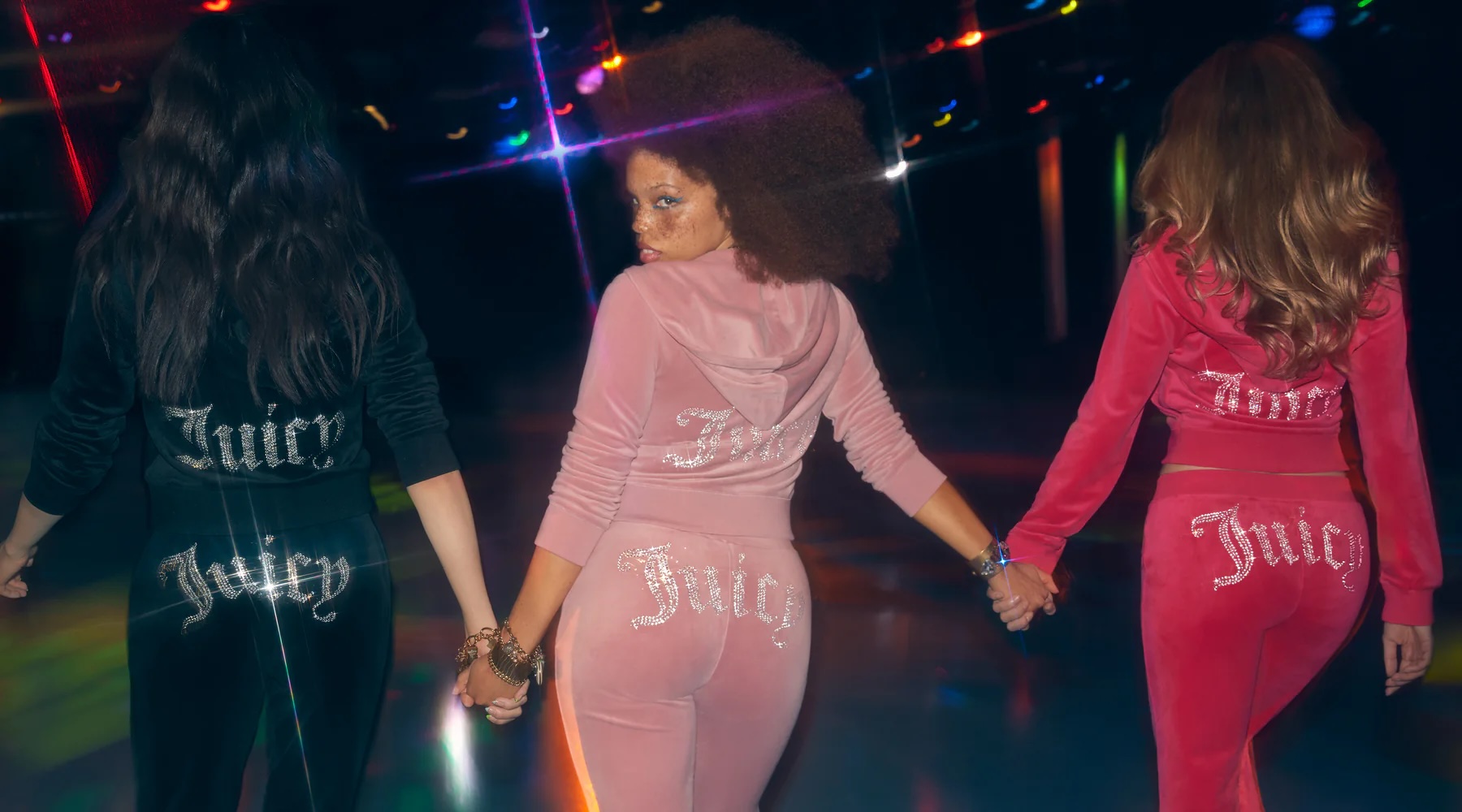
1989–1995: Foundations before Juicy
Before Juicy Couture existed, founders Pamela Skaist-Levy and Gela Nash-Taylor were already building fashion businesses in Los Angeles. Their first label, Travis Jeans, focused on maternity denim, a niche that forced them to think deeply about fit, comfort, and flattering cuts for changing bodies.
This early experience shaped their design philosophy and later became a key influence in the Juicy Couture history, which has always centred on designing for real women rather than runway ideals.
1996–1997: Juicy Couture is born
By the mid-1990s, the founders felt disconnected from the maternity market and began developing a new idea: casual womenswear that felt luxurious, playful, and confident.
They introduced the name Juicy Couture, deliberately ironic at a time when “couture” was associated with formal Parisian fashion. This moment set the tone for a brand that blended glamour with humour. Early products in this era included fitted T-shirts and casual separates in high-quality fabrics, positioned as premium basics with personality.
1998–2000: Building an LA identity
Juicy Couture grew organically through word of mouth and insider visibility rather than traditional advertising. Based in Los Angeles, the brand was perfectly positioned as celebrity culture exploded.
Stylists, assistants, and industry insiders began pulling Juicy pieces for clients. The brand leaned into its “Made in the USA” message and leaned heavily on colour, humour, and overt branding, all elements that would later define the Juicy Couture label history.
2001: The tracksuit moment
The release of the velour Juicy Couture tracksuit marked a turning point. Designed to be flattering, soft, and instantly recognisable, the tracksuit was unlike anything else on the market at the time.
What made it different:
- Sculpted silhouettes rather than boxy sportswear
- Luxe fabrics like velour and terry cloth
- Custom hardware and visible branding
2002–2004: Celebrity culture and mass visibility
This period cemented Juicy Couture as a cultural force. The tracksuit became inseparable from early-2000s celebrity life, worn to airports, coffee runs, shopping trips, and reality TV appearances.
Importantly, the Juicy Couture tracksuit wasn’t positioned as untouchable luxury. It sat in a sweet spot: aspirational but attainable, allowing consumers to buy into the lifestyle they saw in magazines.
2003: Acquisition and scale
Liz Claiborne acquired Juicy Couture in 2003, providing the capital and infrastructure needed for rapid expansion.
Under corporate ownership, Juicy:
- Opened standalone stores globally
- Expanded into accessories, denim, handbags, and fragrance
- Became a full lifestyle brand rather than a single-product label
This period marked a major shift, moving the label from cult favourite to global commercial powerhouse.
2005–2008: Peak years
During the mid-2000s, Juicy Couture reached its commercial and cultural peak. Logo-heavy fashion was dominant, and Juicy’s unapologetic branding fit the moment perfectly.
Tracksuits, logo bags, and embellished accessories were everywhere, with the Juicy Couture bag becoming a popular add-on that reinforced the brand’s head-to-toe lifestyle appeal.
2008–2010: Shifting tastes
The global financial crisis marked a turning point. Consumer preferences began moving away from overt displays of wealth toward minimalism and understatement.
Juicy’s bold colours, logos, and playful excess started to feel out of step with the cultural mood. Internal tensions followed, and in 2010, the founders exited the business.
2013: Sale to Authentic Brands Group
Juicy Couture was sold to Authentic Brands Group for $195 million. This marked a strategic shift from brand-led creative growth to a licensing-focused business model.
Many standalone US stores closed, and distribution broadened. While this kept the brand visible, it also changed how consumers perceived the label.
2014–2018: Decline and dormancy
As fashion moved firmly toward clean lines and muted branding, Juicy Couture became shorthand for a specific, dated era.
However, collectors began paying closer attention to details such as logos and tags, with interest growing around Juicy Couture tag history as buyers sought to identify original early-2000s pieces.
2019–2022: The start of a comeback
The rise of resale culture, archive fashion, and Y2K nostalgia sparked renewed interest. Younger consumers discovered Juicy Couture through second-hand platforms, while older audiences reconnected with it emotionally.
Original branding details, including elements of the Juicy Couture logo, became part of the appeal, reframing Juicy as iconic rather than outdated.
2023–2025: Repositioning for a new generation
In recent years, Juicy Couture has leaned into its heritage while modernising its image. New partnerships, updated silhouettes, and celebrity ambassadors have helped reconnect the brand with contemporary audiences.
Alongside apparel, categories such as Juicy Couture perfume continue to support the brand’s lifestyle positioning, reinforcing Juicy’s presence beyond clothing alone.
Why stock wholesale Juicy Couture Clothing & Accessories
Stocking wholesale Juicy Couture is less about chasing a trend and more about backing a brand with proven demand, high recognition, and cross-generational appeal. Few fashion labels from the early 2000s have translated nostalgia into consistent commercial performance as effectively as Juicy.
- Proven brand recognition that sells: Stocking wholesale Juicy Couture means working with a brand customers already know and actively look for. Juicy Couture’s visibility and cultural recognition reduce friction at the point of sale and support faster buying decisions both online and in-store.
- Sustained demand driven by Y2K revival and resale culture: Y2K fashion has matured into a stable category supported by resale platforms, social media, and ongoing celebrity styling. Juicy Couture sits at the centre of this demand, with customers searching for the brand by name rather than discovering it passively. This creates consistent pull-through for wholesale stock.
- Clear hero products with predictable sell-through: Juicy Couture has well-defined hero categories, particularly tracksuits, coordinated loungewear, and logo-led accessories. These products are immediately recognisable, easy to merchandise, and allow retailers to buy with confidence rather than speculating on trend-led items.
- Cross-generational customer appeal
Juicy Couture resonates with both customers who remember the brand from its original peak and younger shoppers discovering it through Y2K fashion and resale culture. This dual audience supports a broader reach without requiring the brand to be repositioned. - Access to B2B off-price stock through Bundlex: Through Bundlex, retailers can access off-price Juicy Couture clothing and accessories via bundled wholesale deals. This model allows buyers to secure branded inventory at more competitive price points without sourcing individual SKUs or negotiating multiple supplier relationships, supporting stronger margins and pricing flexibility.
Final thoughts
The History of Juicy Couture is a clear case study in how pop culture, comfort, and confident branding can build a fashion empire, and how nostalgia, when paired with genuine demand, can successfully reboot it. Juicy Couture didn’t just follow trends; it helped define an era, then re-entered the market at a moment when consumers were ready to revalue familiarity, comfort, and recognisable design. As widely documented by fashion and business publications, its resurgence reflects a broader shift in how archive brands regain relevance through culture rather than reinvention.
For retailers, this history matters because it underpins why Juicy Couture continues to sell today. The brand’s visibility, resale traction, and cross-generational appeal translate into reliable wholesale demand, particularly when accessed through off-price B2B clothing that supports margin and flexibility.
Explore our Juicy Couture wholesale collection on Bundlex and access off-price clothing designed for retailers who want recognisable stock, strong margins, and proven sell-through.FAQ
Is Juicy Couture a luxury brand?
Juicy Couture is best described as accessible or lifestyle luxury rather than traditional high-end fashion. At its peak, it sat between casualwear and luxury, offering premium fabrics, strong branding, and aspirational appeal at attainable price points. That positioning is still central to how the brand is understood today.
Which celebrity wears Juicy Couture?
Juicy Couture became closely associated with early-2000s celebrity culture, worn by figures such as Paris Hilton, Britney Spears, Jennifer Lopez, and Madonna during its rise. More recently, the brand has re-entered the spotlight through modern celebrity partnerships and social-media-driven visibility, reinforcing its relevance with a new generation.
Is Juicy Couture still popular?
Yes, Juicy Couture remains popular, particularly through Y2K revival, resale platforms, and renewed wholesale demand. Interest is driven by nostalgia, strong brand recognition, and continued visibility online, making it a consistent seller rather than a short-term comeback trend.